

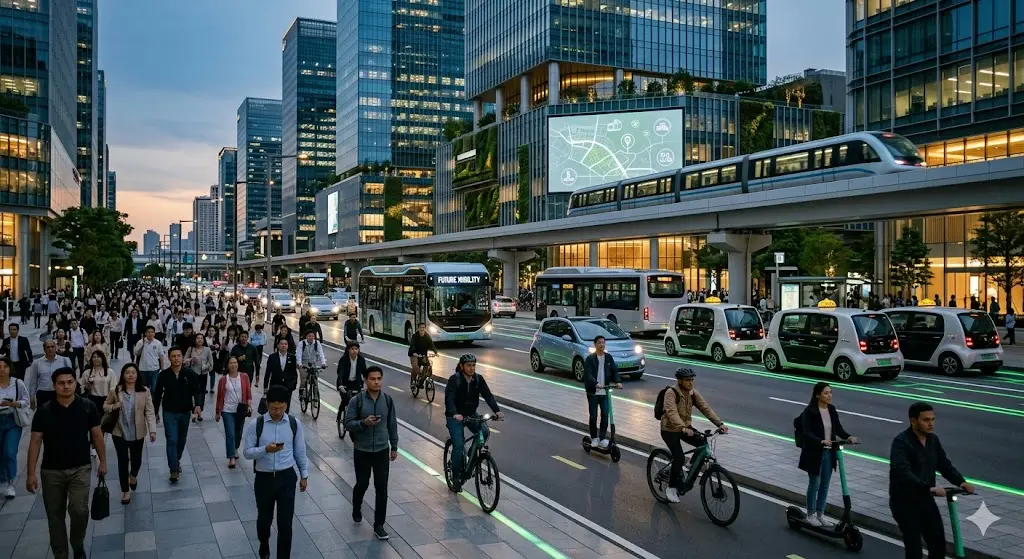
Urbanisation is reshaping how people move, commute, and interact with cities. As more people settle in urban areas, transportation systems are under pressure to become faster, cleaner, smarter, and more connected. Future transportation trends are no longer just about convenience — they're about survival, sustainability, and making crowded cities actually livable.
Urbanisation is influencing future transportation trends because growing city populations create traffic congestion, pollution, housing expansion, and infrastructure stress. Cities are responding with electric mobility, smart public transport, shared transportation systems, walkable neighborhoods, and AI-driven traffic management to keep urban life functioning efficiently.
Why urbanisation is influencing future transportation trends has become one of the biggest discussions among city planners, governments, and businesses. More people are moving into cities every year, and honestly, most urban infrastructure wasn't designed for this level of growth. Roads are crowded. Public transport systems are overloaded. Parking space is disappearing faster than many people expected.
Here's the thing — transportation is no longer just about getting from one place to another. It's becoming deeply connected to climate concerns, work culture, technology, and even mental health. In my experience, cities that fail to modernize transportation usually struggle with productivity, pollution, and quality of life within just a few years.
What most people overlook is that urbanisation isn't slowing down anytime soon. That means transportation trends in 2026 and beyond will probably look very different from what we grew up with.
What Is Urbanisation and Why Does It Matter?
Urbanisation: The process where increasing numbers of people move from rural areas into towns and cities, leading to city expansion and population growth.
Urbanisation changes almost everything around transportation. A city built for one million people suddenly has to support three million commuters. Roads become bottlenecks. Train stations become overcrowded. Delivery services multiply because online shopping keeps growing.
And this shift isn't happening in just one country. It's global.
Large cities are expanding outward while also becoming denser in central areas. That combination creates a transportation puzzle that traditional systems can't fully solve anymore. More buses alone won't fix it. Neither will simply building wider roads.
I've noticed that many cities are now prioritizing "movement efficiency" instead of simply adding more vehicles. That's a huge mindset change.
Why urban growth directly affects transportation
Urban growth influences transportation trends in several connected ways:
Rising population density increases traffic congestion
Demand for public transit grows quickly
Air pollution pushes cities toward electric mobility
Remote work changes commuting patterns
Housing prices force workers farther from city centers
Delivery and logistics traffic rises because of e-commerce
What makes this especially complicated is that these factors feed into each other. One issue creates another.
For example, when housing becomes expensive downtown, people move farther away. Longer commutes then increase fuel consumption, traffic, and transit demand. It's messy, honestly.
Expert Tip
Cities investing in mixed-use neighborhoods usually reduce transportation pressure faster than cities that only expand highways. Keeping workplaces, homes, and services closer together changes commuting behavior dramatically.
Why Urbanisation Matters in 2026
Transportation trends in 2026 are being shaped by one major reality: cities are running out of space.
That sounds simple, but the impact is massive.
Governments can't endlessly build new roads in crowded urban areas. Land costs are too high. Construction takes years. Residents resist disruption. So instead of expanding outward forever, cities are focusing on smarter mobility systems.
We're already seeing several major transportation shifts.
Electric vehicles are becoming urban necessities
Electric vehicles used to feel optional or premium. Now many cities treat them as part of their environmental survival strategy. Urban pollution levels are pushing governments to introduce stricter emissions policies.
Public buses are going electric. Delivery fleets are transitioning too. Even rideshare companies are under pressure to adopt cleaner transportation models.
A few years ago, I thought electric adoption would happen slowly. I was wrong. Once cities started linking air quality with healthcare costs, momentum increased fast.
Shared mobility is replacing ownership
Younger urban residents increasingly care less about owning cars. That surprises older generations sometimes.
But think about it.
If parking costs are extreme and public transportation is reliable enough, car ownership becomes more of a burden than freedom. Shared transportation options like bike rentals, ride-sharing apps, and micro-mobility systems are filling that gap.
Interestingly, some transportation experts now believe fewer privately owned vehicles may actually improve city economies long-term because urban land can be repurposed for housing and public spaces.
That's the counterintuitive part many people miss.
Smart transportation systems are expanding
Artificial intelligence and connected infrastructure are becoming central to urban transportation planning.
Cities now use:
AI-controlled traffic lights
Real-time public transit tracking
Smart parking systems
Predictive maintenance for transit networks
Traffic flow monitoring sensors
These systems reduce delays and improve efficiency without physically expanding roads.
And honestly, most commuters probably don't even notice how much automation is already influencing their daily travel.
Climate pressure is changing transportation priorities
Climate concerns are no longer secondary issues in urban planning. Transportation contributes heavily to emissions, especially in densely populated areas.
As a result, cities are investing more in:
Cycling infrastructure
Pedestrian-friendly design
Electric public transit
Low-emission zones
Sustainable transportation technology
In most cases, governments are now planning transportation alongside environmental goals instead of treating them separately.
How Urbanisation Is Reshaping Transportation Trends Step by Step
Understanding how urbanisation influences transportation becomes easier when you break the process down clearly.
1. Population Growth Increases Transportation Demand
More residents mean more daily movement.
People commute to work, schools, hospitals, shopping centers, and entertainment districts. Transportation demand rises faster than infrastructure expansion, which creates congestion almost immediately.
This is especially obvious in rapidly developing urban regions.
2. Congestion Forces Cities to Innovate
Once traffic congestion becomes severe, cities start searching for alternatives.
Traditional road expansion eventually stops working because urban land is limited. That's why cities begin investing in public transit upgrades, cycling infrastructure, and smart traffic systems.
What most people overlook is that congestion itself often becomes the trigger for innovation.
3. Technology Enters Transportation Systems
Cities begin integrating digital solutions into transportation networks.
Apps provide real-time updates. AI manages traffic flow. Data analytics predict commuting patterns. Smart ticketing systems reduce wait times.
Transportation becomes more connected and responsive instead of static.
4. Sustainability Becomes a Priority
Urban pollution and carbon emissions increase public pressure for greener transportation.
Governments respond with electric buses, EV incentives, clean transit initiatives, and pedestrian-friendly urban planning.
This trend will probably accelerate even more after 2026.
5. Urban Design Starts Influencing Mobility
Modern transportation planning now includes city design itself.
Mixed-use developments reduce commute distances. Walkable communities lower vehicle dependence. Transit-oriented development places housing near transportation hubs.
That's a huge shift from older urban models built around private car ownership.
Expert Tip
Transportation planning works best when cities design for people first, not just vehicles. Cities that focus only on traffic flow often end up creating less livable communities.
Real-World Examples of Urbanisation Changing Transportation
Singapore's smart mobility approach
Singapore has become a strong example of how urbanisation can push transportation innovation. The city-state uses electronic road pricing, highly connected public transportation, and smart traffic systems to manage limited space efficiently.
Because land is scarce, transportation planning there focuses heavily on reducing unnecessary vehicle ownership.
That strategy would've sounded extreme twenty years ago. Today, many cities are studying similar models.
Copenhagen's cycling transformation
Copenhagen took a different approach.
Instead of prioritizing cars, the city invested heavily in cycling infrastructure and pedestrian-friendly streets. Now large portions of the population commute by bicycle daily.
Here's what makes this interesting: improving cycling infrastructure didn't just reduce traffic. It also improved public health and urban quality of life.
Transportation decisions ripple outward into everything else.
Common Misconception About Future Transportation
More Roads Don't Always Solve Traffic
This surprises people every time.
Many assume wider roads automatically reduce congestion. In reality, expanding roads often encourages more driving, which eventually recreates the same traffic problems.
Urban planners call this induced demand.
I've seen cities spend enormous amounts on road expansion only to face similar congestion levels a few years later. Meanwhile, investments in reliable public transportation often create longer-term improvements.
That's why future transportation trends are shifting toward smarter systems instead of endless highway construction.
Expert Tips and What Actually Works
In my experience, cities succeed when transportation planning becomes proactive rather than reactive.
Waiting until congestion becomes unbearable usually makes solutions more expensive and politically difficult. Cities that plan early adapt faster.
Here are a few approaches that consistently seem effective:
Build around transit hubs
Transit-oriented development reduces car dependence naturally. When housing, offices, and services exist near public transport, commuting becomes easier without adding traffic.
Focus on flexibility
Transportation systems shouldn't rely on a single solution.
Cities need buses, trains, cycling infrastructure, pedestrian zones, ridesharing systems, and smart traffic management working together.
Prioritize short-distance mobility
Many urban trips are surprisingly short.
That's why scooters, bikes, and walkable streets matter more than some people think. Replacing short car trips can significantly reduce congestion.
Prepare for changing work patterns
Remote and hybrid work models are changing transportation demand. Rush-hour commuting patterns already look different compared to five years ago.
Cities that adapt transportation schedules and infrastructure accordingly will probably manage urban growth better.
Expert Tip
One overlooked transportation trend is nighttime logistics planning. Some cities are moving freight deliveries to overnight hours to reduce daytime congestion. It sounds minor, but it can dramatically improve urban traffic flow.
Why Businesses Should Pay Attention
Urban transportation trends don't just affect governments or commuters. Businesses are heavily impacted too.
Delivery costs, employee commuting, customer accessibility, and supply chain efficiency all depend on transportation systems.
For example, retail businesses located near strong public transportation often experience higher foot traffic. Employers also increasingly consider commute accessibility when choosing office locations.
What most guides miss is that transportation infrastructure quietly shapes local economies.
Poor transportation reduces productivity. Efficient transportation attracts investment.
It's really that simple sometimes.
People Most Asked About Why Urbanisation Is Influencing Future Transportation Trends
How does urbanisation affect transportation systems?
Urbanisation increases population density and commuting demand, which places pressure on roads, transit systems, and infrastructure. Cities respond by investing in smarter, cleaner, and more efficient transportation solutions.
Why are electric vehicles becoming more popular in cities?
Cities are pushing electric vehicles because they help reduce pollution and support climate goals. Many urban governments now offer incentives or regulations encouraging cleaner transportation methods.
Will public transportation replace private cars?
Probably not completely. However, in many major cities, public transportation and shared mobility are becoming more practical than private vehicle ownership due to congestion and parking costs.
What is smart transportation?
Smart transportation uses technology like AI, sensors, data analytics, and connected infrastructure to improve traffic flow, reduce delays, and optimize urban mobility systems.
Why are walkable cities becoming popular?
Walkable cities reduce traffic congestion, lower pollution, improve public health, and create more livable urban environments. They're also often economically beneficial for local businesses.
How does urbanisation influence transportation technology?
Urbanisation creates transportation challenges that encourage innovation. Demand for efficient mobility pushes development in electric vehicles, autonomous transportation, AI traffic systems, and connected public transit.
Are future transportation trends focused more on sustainability?
Yes. Most transportation trends now strongly emphasize sustainability because urban pollution, climate concerns, and energy efficiency are becoming major priorities worldwide.
Final Thoughts
Why urbanisation is influencing future transportation trends comes down to one simple reality: cities must move more people with less space and lower environmental impact. Traditional transportation models aren't enough anymore.
Future transportation systems will likely become smarter, cleaner, more connected, and less dependent on private vehicle ownership. In my opinion, the cities that adapt fastest won't just reduce congestion — they'll create healthier, more productive communities people actually enjoy living in.
Urbanisation isn't slowing down. Transportation innovation probably won't either.
Businesses and agencies looking to improve brand visibility and SEO ranking can benefit from combining press release distribution services with expert digital marketing services. These platforms help generate high authority backlinks, boost organic traffic, and secure wider media coverage through instant publishing solutions tailored for startups, bloggers, and SEO professionals aiming for stronger online growth.