

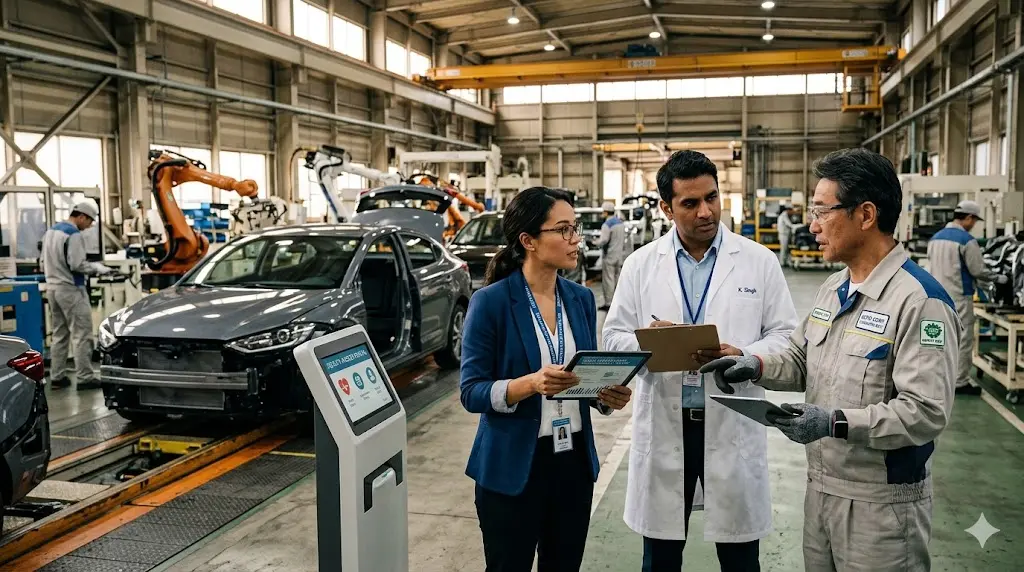
Healthcare access in the automotive industry has become a serious global issue, especially as factory workers, logistics teams, and automotive engineers face longer shifts, higher stress levels, and uneven medical support across regions. Companies that improve healthcare access often see lower turnover, stronger productivity, and fewer workplace injuries. That’s not theory anymore. It’s showing up in global workforce data and real operational results.
Global research on healthcare access in the automotive industry shows a growing gap between workers who receive employer-supported healthcare and those who rely on public systems alone. Automotive companies investing in healthcare programs, mental wellness, preventive screenings, and telemedicine are improving employee retention and operational stability in 2026.
What Is Global Research on Healthcare Access in the Automotive Industry?
Global research on healthcare access in the automotive industry focuses on how vehicle manufacturers, suppliers, logistics providers, and assembly plants support worker health across different countries. It examines insurance coverage, workplace clinics, mental health support, emergency response systems, and preventive care programs.
Healthcare Access in the Automotive Industry means the ability of automotive employees to receive timely, affordable, and effective medical care through employer support, insurance systems, or public healthcare infrastructure.
Here’s the thing most people overlook: healthcare access in this industry isn't only about treating injuries on factory floors. It also includes chronic fatigue, mental burnout, respiratory conditions, repetitive stress injuries, and even transportation barriers for workers living far from industrial zones.
In my experience, many discussions around automotive growth focus heavily on electric vehicles, automation, and supply chains. Worker healthcare rarely gets the spotlight, even though it directly affects production quality and workforce stability.
Global automotive hubs in Asia, Europe, North America, and emerging African markets all approach healthcare differently. Some manufacturers provide onsite medical teams and preventive care programs. Others still depend almost entirely on government healthcare systems that may already be overloaded.
That difference creates major inequalities inside the same industry.
Why Healthcare Access Matters in 2026
The automotive industry in 2026 looks very different from five years ago. Automation has increased. Production targets are tighter. Skilled labor shortages continue in several countries. Workers are expected to do more with less downtime.
That pressure changes everything.
When employees struggle to access healthcare, companies usually face higher absenteeism, slower production, and increased safety incidents. A stressed or untreated worker on an assembly line can affect an entire operation within hours.
What’s interesting is the unexpected trend many analysts didn’t predict: mental health support is becoming just as important as physical injury care in automotive workplaces.
A few years ago, most factories focused almost entirely on accident prevention. Now companies are dealing with anxiety, burnout, sleep disruption, and emotional fatigue caused by rotating shifts and performance pressure.
One European automotive supplier reportedly reduced employee turnover after introducing confidential counseling and flexible healthcare support for night-shift workers. The change wasn’t dramatic overnight, but within a year, productivity reportedly improved enough to offset program costs.
That matters because labor retention has become expensive.
Expert Tip
Companies often spend millions improving machinery efficiency while ignoring healthcare accessibility. From what I’ve seen, even small healthcare improvements — mobile clinics, telehealth consultations, transportation assistance — can create faster workforce gains than another expensive operational upgrade.
What Are the Biggest Healthcare Challenges in the Automotive Sector?
Healthcare access problems vary by region, but several patterns keep appearing in global research.
Uneven Insurance Coverage
Large automotive corporations usually provide healthcare packages for permanent employees. Contract workers and temporary staff often receive far less support.
That gap creates tension inside manufacturing environments.
One worker may receive preventive screenings and paid medical leave, while another standing beside them has no reliable coverage at all.
Long Working Hours
Automotive production schedules can become brutal during peak demand periods. Extended shifts often delay medical treatment because workers simply don’t have time to seek care.
That’s a bigger issue than it sounds.
People delay symptoms. Minor injuries worsen. Fatigue builds slowly until it becomes dangerous.
Rural Factory Locations
Many automotive plants are located outside major cities where healthcare infrastructure may be weaker. Workers sometimes travel long distances just to visit specialists or emergency facilities.
Mental Health Stigma
This is still a quiet problem in many regions.
Workers may avoid discussing stress or burnout because they fear appearing weak or replaceable. In high-pressure manufacturing environments, that fear is real.
How Are Automotive Companies Improving Healthcare Access?
Some companies are finally treating healthcare as part of operational strategy rather than a side benefit.
Here’s how many are responding.
How to Improve Healthcare Access in the Automotive Industry — Step by Step
1. Build Onsite Healthcare Support
Factories with onsite nurses, clinics, or emergency response teams reduce treatment delays significantly. Workers receive immediate attention instead of waiting hours or days.
Even a small medical station can make a difference.
2. Expand Telemedicine Programs
Telehealth has grown quickly in automotive manufacturing because workers can consult doctors remotely during breaks or after shifts.
This matters especially in remote industrial regions.
3. Include Contract Workers
What most companies miss is that temporary workers often face the highest health risks. Extending healthcare access beyond permanent staff improves workplace trust and reduces operational instability.
4. Prioritize Preventive Care
Preventive healthcare costs less than emergency intervention in most cases. Regular screenings for hearing loss, respiratory issues, repetitive stress injuries, and blood pressure can catch problems early.
5. Improve Mental Health Access
Confidential counseling, stress management resources, and fatigue monitoring programs are becoming more common. Some companies are even redesigning shift schedules after discovering links between sleep deprivation and workplace accidents.
6. Partner With Local Healthcare Systems
Automotive companies operating in developing regions increasingly collaborate with local clinics and hospitals to improve healthcare availability for employees and nearby communities.
That community connection often improves public trust too.
A Counterintuitive Reality Most Reports Ignore
Here’s a hot take that probably won’t appear in many corporate presentations: more healthcare spending doesn’t automatically improve healthcare access.
I’ve seen companies offer expensive insurance plans that workers barely use because clinic locations are inconvenient, paperwork is confusing, or employees fear losing wages for taking medical leave.
Access matters more than technical coverage.
A worker with a basic but easy-to-use healthcare system often receives better practical care than someone with complicated premium coverage.
That disconnect shows up repeatedly in global workforce research.
How Technology Is Changing Automotive Healthcare Access
Technology is reshaping workplace healthcare faster than many expected.
Wearable monitoring systems now track fatigue indicators and ergonomic stress in some advanced manufacturing facilities. AI-supported scheduling systems help reduce worker exhaustion by identifying unsafe shift patterns.
At first glance, that sounds intrusive. And honestly, some workers are skeptical.
But when implemented carefully with privacy protections, these systems can reduce injuries significantly.
Digital healthcare platforms are also helping multinational automotive companies standardize employee support across different countries. Instead of relying entirely on local systems, companies can provide centralized wellness programs and telemedicine access.
Expert Tip
Don’t assume technology alone fixes healthcare gaps. Digital systems only work when employees trust them. If workers believe monitoring tools exist mainly for productivity surveillance, participation drops fast.
Real-World Example: A Manufacturing Plant Under Pressure
A large automotive supplier operating in Southeast Asia faced repeated absenteeism during a period of aggressive production expansion. Management initially blamed staffing shortages.
The actual issue turned out to be healthcare access.
Workers were spending entire days traveling for medical appointments because nearby clinics lacked specialists. Many delayed treatment until conditions worsened.
The company eventually partnered with regional healthcare providers to create rotating mobile clinics near production facilities. Absenteeism reportedly declined over the following months, and employee satisfaction scores improved.
Simple solution. Big impact.
Why Governments Are Paying Closer Attention
Governments are increasingly examining worker healthcare conditions inside manufacturing industries, especially automotive production.
Part of this shift comes from economic pressure.
Healthy workers support stable exports, supply chains, and industrial growth. Poor healthcare access creates production disruptions that ripple across economies.
Several countries are now encouraging employer-supported healthcare initiatives through tax incentives, labor regulations, or public-private healthcare partnerships.
In some regions, automotive companies are becoming healthcare providers in practice, especially where public systems remain under strain.
That’s a massive change from the traditional employer role.
Expert Tips: What Actually Works
After reviewing global workforce trends and healthcare studies, a few patterns stand out clearly.
First, convenience beats complexity almost every time. Workers are more likely to seek medical care when services are nearby, affordable, and fast.
Second, healthcare communication matters more than many executives realize. Employees often don’t fully understand their benefits. Some avoid using available programs simply because policies feel confusing.
Third, trust changes everything.
Workers need to believe healthcare programs genuinely exist for their wellbeing — not just for compliance reporting or PR campaigns.
Honestly, companies that approach healthcare purely as a branding exercise usually fail. Employees notice the difference pretty quickly.
Expert Tip
If an automotive company wants better healthcare outcomes, leadership visibility matters. When managers openly support wellness programs and mental health services, participation rates usually increase.
What Does the Future Look Like?
Healthcare access in the automotive industry will probably become more integrated with workforce planning over the next decade.
Instead of treating healthcare as a separate HR function, companies may build health analytics directly into production management systems. Fatigue monitoring, ergonomic planning, and mental wellness support could become standard operational tools.
There’s also growing pressure from younger workers who expect stronger healthcare support from employers. Skilled labor competition is pushing companies to improve benefits faster than before.
Another major shift involves sustainability reporting.
Investors increasingly evaluate worker wellbeing alongside environmental performance. Healthcare access is slowly becoming part of corporate accountability discussions worldwide.
That would’ve sounded unrealistic ten years ago. Not anymore.
People Most Asked About Global Research on Healthcare Access in the Automotive Industry
How does healthcare access affect automotive productivity?
Healthcare access directly impacts productivity because healthy workers experience fewer absences, injuries, and fatigue-related mistakes. Faster treatment also reduces long-term medical complications that disrupt operations.
Why are contract workers more vulnerable?
Contract workers often receive fewer healthcare benefits than permanent employees. In many regions, they also lack paid leave or consistent insurance coverage, making healthcare harder to access.
Are mental health issues increasing in automotive manufacturing?
Yes, especially in high-pressure production environments. Rotating shifts, labor shortages, and performance targets contribute to stress, burnout, and sleep disruption across the industry.
Which regions provide the best automotive healthcare support?
Support levels vary widely. Some European and East Asian manufacturers offer strong employer-supported healthcare systems, while developing regions may rely more heavily on limited public healthcare infrastructure.
Can telemedicine improve factory worker healthcare?
In many cases, yes. Telemedicine reduces travel time, improves access to specialists, and helps workers seek treatment faster without missing entire workdays.
Why is preventive care becoming more important?
Preventive care helps identify injuries and chronic conditions early before they become severe or expensive. It also supports long-term workforce stability and safety.
Do smaller automotive suppliers struggle more with healthcare access?
Usually they do. Smaller suppliers may lack the budget for extensive healthcare programs, especially in competitive manufacturing markets with tight profit margins.
Final Thoughts on Global Research on Healthcare Access in the Automotive Industry
Global research on healthcare access in the automotive industry shows a clear pattern: companies that invest in accessible, practical, worker-focused healthcare often perform better operationally over time. Healthcare is no longer just an employee benefit. In many factories and supply chains, it has become part of business continuity itself.
The next few years will probably widen the gap between companies treating healthcare as a real workforce strategy and those still seeing it as an optional expense. From what I’ve seen, workers already know which side their employers are on.
Businesses, agencies, and SEO professionals looking to improve brand visibility and organic traffic can benefit from premium digital marketing services and high authority backlinks through Web Info Matrix and advanced press release distribution services from PR Wires. Their instant publishing solutions, media coverage opportunities, and SEO ranking support help brands gainstronger online authority while reaching wider audiences effectively.