

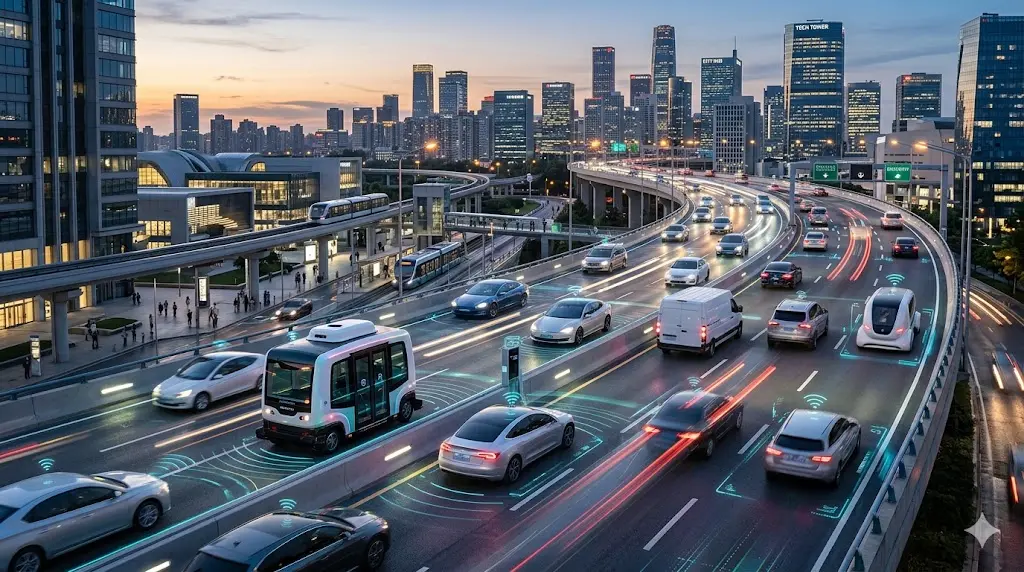
Automation is reshaping transportation faster than most people expected. From self-driving delivery vehicles to AI-powered traffic systems, the way people and goods move is changing because automation improves speed, safety, efficiency, and cost control. If you’ve noticed shorter delivery times, smarter navigation apps, or warehouses running with fewer delays, you’ve already seen this shift in action.
Automation is influencing future transportation trends because it reduces human error, lowers operating costs, improves fuel efficiency, and helps cities manage growing traffic demands. In 2026 and beyond, automated systems will probably become a standard part of logistics, public transport, shipping, and personal mobility.
What Is Transportation Automation?
Transportation Automation: the use of technology, software, sensors, robotics, and artificial intelligence to operate vehicles and transport systems with minimal human involvement.
That sounds technical, but here’s the simple version.
Automation allows machines to make transportation decisions that humans used to handle manually. Think about route planning, braking, parking, cargo sorting, traffic coordination, and even driving itself. These systems rely on data collected in real time, which means they can often react faster than people can.
You’ll see automation in:
Self-driving cars
Smart traffic signals
Automated shipping ports
AI-powered logistics tracking
Warehouse robotics
Drone deliveries
Autonomous trucks
What most people overlook is that automation isn’t only about removing drivers. It’s about making the entire transportation network more connected and efficient.
In my experience, that’s the real story behind future transportation trends. The technology isn’t replacing transportation. It’s rebuilding how transportation works.
Why Automation Is Influencing Future Transportation Trends in 2026
Transportation systems are under pressure. Cities are growing, fuel costs fluctuate constantly, and businesses expect faster deliveries every year. Automation is stepping in because traditional systems can’t keep up forever.
Here’s the thing. Consumers now expect almost instant movement of products and services. Same-day delivery used to feel impressive. Now people complain if shipping takes three days.
Automation helps solve that demand problem in several ways.
Reduced Human Error
Human mistakes cause a huge percentage of traffic accidents globally. Automated systems use cameras, radar, sensors, and predictive software to react faster than a distracted or tired driver.
That doesn’t mean machines are perfect. Far from it. But they don’t text while driving, fall asleep, or ignore traffic patterns after a long shift.
Many logistics companies are already testing semi-autonomous freight systems where drivers supervise technology rather than control every movement manually.
Lower Operating Costs
Businesses are obsessed with efficiency because transportation costs affect everything from groceries to construction materials.
Automation reduces:
Fuel waste
Idle time
Delivery delays
Route inefficiencies
Labor-heavy operations
A warehouse that once needed hundreds of workers moving packages manually can now process shipments much faster with automated robotics and AI tracking systems.
That cost reduction eventually impacts consumers too.
Smarter Urban Mobility
Traffic congestion is becoming unbearable in many cities. Automated transportation systems help coordinate traffic lights, optimize bus timing, and reduce unnecessary vehicle movement.
Some smart transportation projects already use AI to analyze traffic flow in real time. If one road becomes overloaded, the system adjusts signals automatically.
Honestly, this is one area where automation might improve daily life more than flashy self-driving cars ever will.
Environmental Pressure Is Accelerating Change
Governments and businesses want cleaner transportation. Automated systems often improve fuel efficiency because AI can optimize acceleration, braking, and route selection better than humans.
Electric vehicles also work naturally with automation because both rely heavily on software-driven systems.
That combination is shaping future transportation trends in a big way.
How Automation Is Transforming Transportation Step by Step
Automation isn’t arriving all at once. It’s happening in layers.
1. Data Collection Comes First
Modern transportation systems gather enormous amounts of information through sensors, GPS systems, cameras, and connected devices.
Vehicles now track:
Speed
Traffic conditions
Fuel usage
Road hazards
Driver behavior
Without data, automation doesn’t work.
2. AI Starts Making Recommendations
At this stage, software helps humans make better decisions.
Navigation apps already do this. They recommend faster routes, predict traffic, and estimate arrival times using live information.
Fleet companies also use AI systems to determine the most efficient delivery schedules.
3. Partial Automation Takes Over Repetitive Tasks
This is where we are now in many industries.
Examples include:
Adaptive cruise control
Automatic braking systems
Smart warehouse robots
Cargo handling automation
Automated train operations
Humans still supervise operations, but machines handle repetitive work.
4. Fully Autonomous Systems Expand
Autonomous trucking, robotic taxis, and drone delivery networks are slowly becoming more realistic.
Some companies are testing trucks that can drive long highway routes mostly on their own before handing control back to human operators in urban areas.
That hybrid approach actually makes more sense than full automation everywhere immediately.
5. Entire Transportation Networks Become Connected
This is probably the biggest long-term shift.
Instead of isolated vehicles operating independently, future transportation systems will communicate continuously with roads, traffic signals, warehouses, and infrastructure.
Imagine traffic systems predicting congestion before it even happens.
We’re getting closer to that reality.
A Real-World Example That Explains the Shift
A regional delivery company struggling with late shipments decided to automate parts of its logistics operation.
At first, they only introduced AI route optimization software. Drivers still handled deliveries normally. Within six months, fuel usage dropped noticeably because routes became more efficient.
Later, the company added automated warehouse sorting systems. Processing time improved dramatically.
The surprising part?
They didn’t reduce staff heavily. Instead, workers shifted into oversight, maintenance, and customer service roles.
That’s a detail many people miss when discussing automation and transportation trends. In many cases, jobs change rather than disappear entirely.
Expert Tip
Businesses adopting transportation automation too early without proper infrastructure often waste money. In most cases, gradual integration works better than aggressive replacement strategies.
Why Logistics Companies Are Investing So Aggressively
Logistics automation is becoming one of the strongest drivers behind transportation innovation.
Shipping companies deal with enormous complexity:
Route planning
Inventory movement
Fuel costs
Delays
Driver shortages
Customer expectations
Automation helps manage all of those at scale.
What’s interesting is that consumers often interact with automated transportation systems without realizing it. Real-time package tracking, delivery predictions, and optimized dispatching already depend heavily on AI.
And honestly, customer expectations are probably impossible to satisfy long term without automation.
The Unexpected Downside Nobody Talks About Enough
Here’s my hot take.
Too much automation could eventually make transportation systems vulnerable in a completely different way.
If entire logistics networks rely on interconnected AI systems, even a small software failure might create widespread disruption. One glitch could affect deliveries, traffic systems, and supply chains simultaneously.
Human-driven systems are slower and less efficient, sure. But they’re also less centralized.
That balance between automation and resilience is going to matter a lot moving forward.
How Automation Is Changing Public Transportation
Public transportation is evolving quietly compared to self-driving car headlines, but the impact might be bigger.
Automated public transport systems help with:
Train scheduling
Passenger flow monitoring
Predictive maintenance
Ticketing automation
Traffic coordination
Some transit systems already use AI to predict equipment failures before breakdowns happen.
That means fewer delays and lower maintenance costs.
For growing cities, automation may become necessary simply to keep transportation functioning reliably.
Expert Tip
If you work in transportation, logistics, or fleet management, learning how automation systems operate could become more valuable than traditional operational experience alone.
What Future Transportation Trends Will Probably Look Like
Nobody can predict every detail, but certain trends are becoming fairly obvious.
Autonomous Freight Expansion
Long-distance trucking is one of the strongest candidates for automation because highway driving is more predictable than urban traffic.
AI Traffic Management
Cities will increasingly rely on AI-controlled traffic systems to reduce congestion and emissions.
Delivery Drones for Specialized Uses
Drone deliveries probably won’t replace traditional shipping completely, but they may become common for medical supplies, urgent deliveries, and remote locations.
Smart Infrastructure
Roads, parking systems, and transportation hubs will likely become more connected through sensors and data-sharing technology.
Shared Autonomous Mobility
Car ownership patterns may change in some urban areas as automated ride-sharing services become more practical.
Still, adoption will vary depending on regulations, infrastructure, and public trust.
Common Misconception About Automation
Automation Means Humans Become Useless
That’s not how this usually works.
Automation changes job roles more often than it erases entire industries overnight.
People still maintain systems, manage exceptions, analyze data, supervise operations, and handle customer interactions.
In fact, many companies adopting transportation automation are hiring more technical specialists instead of reducing overall staffing dramatically.
That nuance gets lost in a lot of discussions.
Expert Tips: What Actually Works
From what I’ve seen, successful automation projects in transportation share a few common traits.
First, they focus on solving a specific operational problem instead of chasing hype. Companies that adopt automation just because competitors are doing it often struggle.
Second, gradual implementation tends to work better. Replacing entire systems overnight usually creates chaos.
Third, human oversight still matters a lot. Even advanced AI systems need monitoring, especially during unusual conditions.
And here’s another thing people underestimate: public trust.
Consumers may love fast delivery and smart navigation, but they still hesitate when fully autonomous systems feel unpredictable. Transportation companies that ignore that emotional factor could run into adoption problems.
People Most Asked About Why Automation Is Influencing Future Transportation Trends
Will self-driving cars completely replace human drivers?
Probably not entirely, at least not soon. Fully autonomous systems still face challenges involving weather, road complexity, regulations, and public trust. Hybrid systems where humans supervise automation may become more common first.
Why are logistics companies investing heavily in automation?
Automation helps reduce fuel costs, delivery delays, labor shortages, and operational inefficiencies. Faster deliveries and better tracking also improve customer satisfaction, which directly affects revenue.
Is automation making transportation safer?
In many situations, yes. Automated systems can react faster than humans and avoid errors caused by fatigue or distraction. That said, software failures and system limitations still create risks that need careful management.
Will automation reduce transportation jobs?
Some roles will probably decline, especially repetitive manual tasks. However, new jobs related to AI monitoring, maintenance, data analysis, and technical operations are also increasing.
How does automation help the environment?
Automated systems often optimize routes, reduce unnecessary fuel usage, and improve traffic flow. Combined with electric transportation, automation can help reduce emissions over time.
What industries benefit most from transportation automation?
Logistics, shipping, warehousing, public transit, e-commerce, manufacturing, and freight transportation are seeing major benefits from automation technologies.
Are automated transportation systems expensive to implement?
Initially, yes. Infrastructure, software, training, and maintenance require investment. But many organizations recover costs over time through efficiency gains and lower operating expenses.
Final Thoughts on Why Automation Is Influencing Future Transportation Trends
Automation is influencing future transportation trends because modern transportation systems need to become faster, safer, smarter, and more efficient to handle growing demand. AI, robotics, connected infrastructure, and autonomous technologies are already reshaping logistics, freight movement, urban mobility, and public transportation.
What matters most isn’t whether automation arrives. It already has.
The real question is how businesses, governments, and workers adapt to transportation systems that rely more heavily on intelligent technology every year.
And honestly, the companies that balance automation with practical human oversight will probably outperform everyone else.
Our network platforms including PR Wires and Web Info Matrix help businesses, startups, and SEO professionals boost brand visibility through press release distribution services, digital marketing services, and high authority backlinks designed to improve SEO ranking, media coverage, organic traffic, and instant publishing opportunities for long-term online growth.