

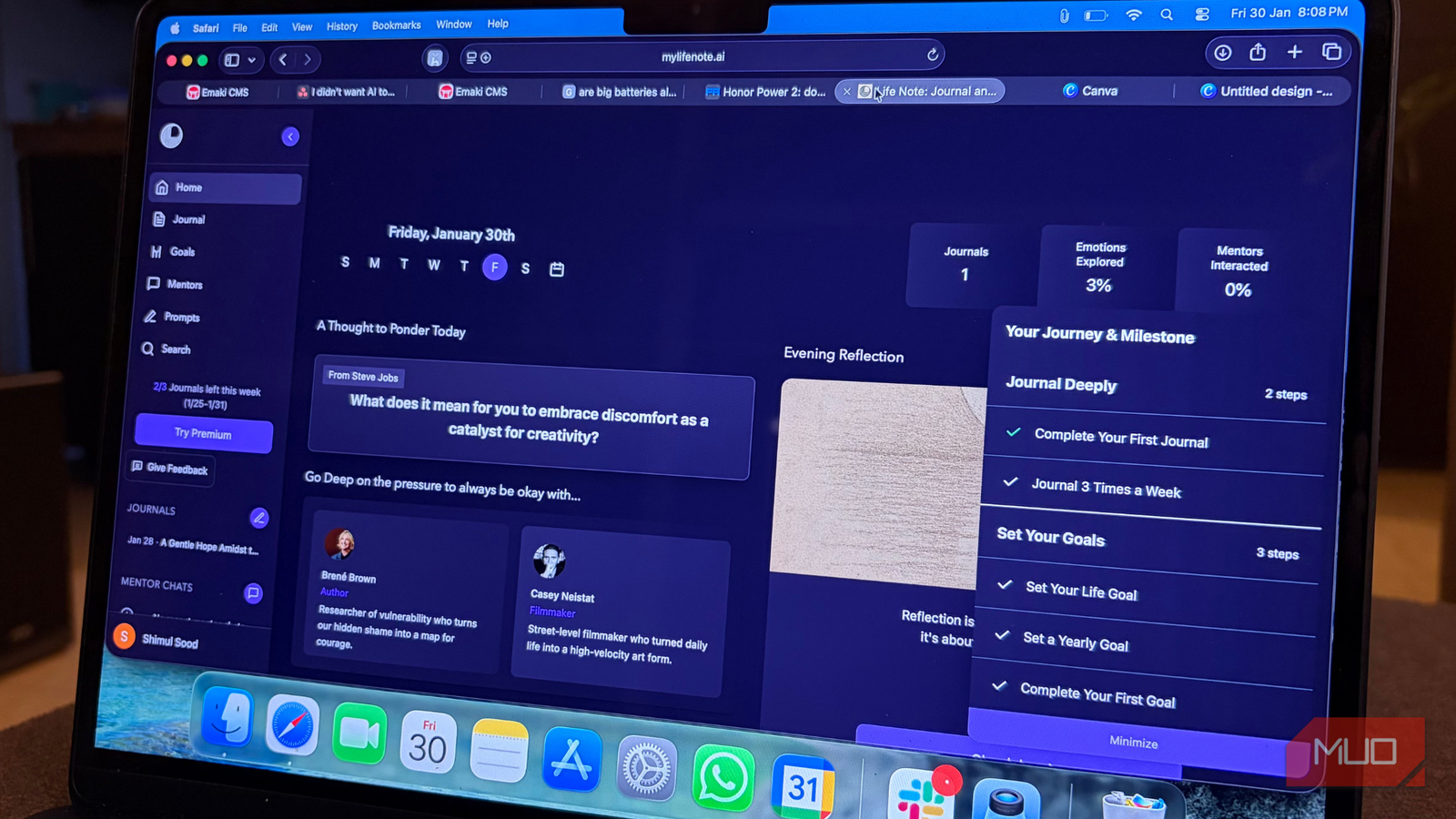
For as long as I can remember, journaling has been a deeply personal and analog practice for me. As a child, I would eagerly search for diaries with cute covers, filling their pages with half-formed ideas, random doodles, and the unfiltered thoughts of my mind. I am not exaggerating when I say I have filled over 20 diaries growing up, journaling and sketching my way through different phases of childhood. Each diary became a time capsule of my evolving self.
This tradition was also quietly nurtured at home. Every new year, my parents would gift me a fresh diary, a gesture that still means a great deal to me. It showed they understood how deeply attached I was to journaling as a source of comfort and clarity. There is something irreplaceable about the tactile experience of pen meeting paper, and that feeling continues to hold a special place in my heart.
Yet, as technology increasingly permeates every aspect of our lives, it is natural to adapt, even if only a little. I never fully embraced digital journaling; typing out thoughts never felt the same as writing by hand. But this AI-powered journaling app, Life Note, caught me off guard. I approached it with low expectations and emerged pleasantly surprised by how thoughtfully it integrates into the journaling process.
If you are someone who is as nerdy and sentimental about journaling as I am—someone who loves capturing thoughts, memories, and moods—you will want to hear about this. This app is definitely worth your attention.
What is Life Note?
A Private Way to Write, Reflect, and Grow
Life Note is an AI-powered journaling app that allows you to write down your thoughts freely while also serving as a personal growth companion. At its core, it preserves the traditional feel of journaling: you simply write whatever is on your mind. The difference is that an interactive AI sits alongside you, helping you reflect, understand patterns, and grow over time.
The app offers insights, guidance, and fresh perspectives through AI mentors inspired by well-known historical figures. As you write, the AI can support self-reflection, goal-setting, and ask you thoughtful questions. This makes the overall process feel more intentional, especially on days when you are unsure what to write or how to process certain thoughts.
What really stands out is the personalized guidance. Life Note adapts to your entries and offers advice to help manage negative thinking, encourage positive habits, and support a healthier mindset. If you ever feel stuck or fall back into old patterns, the AI keeps track of your progress and nudges you in the right direction. The structured question-and-answer format helps you dig deeper into your thoughts, leading to stronger self-awareness over time.
Privacy is a significant concern for many journalers. Life Note addresses this by using strong AES-GCM encryption to keep your journal entries private and secure at all times. AES-GCM (Advanced Encryption Standard in Galois Counter Mode) is a high-performance encryption method that ensures both data confidentiality and authenticity. Your thoughts stay yours, safe from prying eyes.
My Experience with Life Note
Before diving into my experience, it is important to know where you can use Life Note. The app is available on the web, and can also be downloaded from the App Store on iPhone or the Google Play Store on Android. There is even an option to join its Discord community if you want to connect with other users. Personally, I prefer a big canvas when I journal, so starting on the web felt like an obvious choice. That extra space makes a difference. When traveling, I switch to journaling on my iPhone, though I admit it does not feel quite as enjoyable as writing on a larger screen.
Getting started on the web was refreshingly simple. First, you select the language you are comfortable with, then choose your primary goal for journaling. There are six options to pick from; I chose Creativity. What I liked is that the choice is not permanent—you can change it anytime, which makes sense because goals shift as life evolves. After that, the app walks you through a few Did You Know prompts about journaling. Even if you already journal regularly, I still recommend reading through them because they help set the tone and give a better understanding of how Life Note approaches the process.
Once that is done, you are ready to write. The interface is clean and unintimidating, making it easy to start. While journaling, you can select your Wisdom Council, essentially your AI mentor. I chose Steve Jobs, mainly because of my interest in technology, but you can pick whoever resonates with you. At the bottom of the writing area, you will also find options to get inspired by adding your own journal prompt or linking your entry to a personal goal. These features are simple but very useful when you need a bit of direction.
After you finish writing, all you have to do is click Save in the bottom-right corner. This approach is exactly what surprised me. Your chosen mentor then analyzes your entry and responds with a personalized message based on what you have written. Reading that message left me feeling shocked, surprised, and oddly comforted. It felt personal, as if it were saying exactly what I needed to hear that day.
When I journal on paper, the main relief comes from getting everything out of my head. And yes, that alone does make me feel better. But Life Note goes a step further: it explains your thoughts, highlights patterns, and frames them through the lens of what your chosen historical figure might have done in a similar situation. This extra layer of perspective is what sets it apart.
I am impressed, to say the least. Everything I experienced was through the free web version. There is also a premium tier that offers features such as lifetime mentor chats, multiple perspectives, a weekly reflection letter, and priority support. The pricing is $6.66 per month or $79.99 per year, which feels reasonable if you are looking for deeper and guided reflection. That said, I am perfectly happy sticking with the free version. For me, journaling is about pouring my thoughts out freely, and Life Note already does a wonderful job of supporting that without asking for anything more.
The Evolution of Journaling in the Digital Age
Journaling has been a human practice for centuries, serving as a tool for self-reflection, memory keeping, and emotional release. From the ancient diaries of Roman emperors to the modern bullet journals, the core purpose remains unchanged: to capture the inner self. However, the methods have evolved dramatically. The advent of digital tools brought convenience but often lacked the intimacy of pen and paper. Many traditionalists, like myself, resisted the shift.
Artificial intelligence has begun to change that perception. AI-driven journaling apps like Life Note are not just digitizing the process; they are reimagining it. By incorporating machine learning and natural language processing, these apps can analyze your writing patterns, provide personalized prompts, and offer insights that a human might miss. This is not about replacing the emotional connection to writing but enhancing it with data-driven reflection.
The concept of AI mentors is particularly intriguing. Historical figures like Steve Jobs, Marie Curie, or Leonardo da Vinci are not just names from the past; they represent distinct ways of thinking. Life Note’s Wisdom Council allows you to borrow their perspective for a moment, offering a fresh lens through which to view your own experiences. This blending of history and technology creates a unique form of guided introspection that feels both novel and grounding.
Privacy remains a critical factor. Journaling is inherently private, and the idea of an AI reading your most intimate thoughts can be unsettling. Life Note addresses this through robust encryption, but it is still a consideration for users. The app’s commitment to data security helps build trust, though it is worth noting that no digital system is entirely impenetrable.
Why This Approach Works for Skeptics
I entered this experience as a skeptic. I love the physical act of writing, the smell of paper, and the permanence of ink. However, the process of journaling can sometimes feel stagnant. When you are stuck in the same thought patterns, paper does not push back. Life Note’s AI does. It encourages you to dig deeper, ask better questions, and consider angles you might have overlooked.
For those who fear that AI will dilute the authenticity of journaling, the app actually does the opposite. It amplifies your voice by providing structure without dominating the narrative. You are still the author; the AI is merely a companion. This balance is crucial for maintaining the soul of journaling while leveraging modern technology.
The app also helps with consistency. Many people start journals with enthusiasm but quickly abandon them. Life Note’s gentle nudges and personalized feedback can help sustain the habit. By linking entries to goals and offering weekly reflections, the app turns sporadic writing into a meaningful routine.
Another advantage is the app’s adaptability. Whether you are journaling for creativity, emotional healing, or goal tracking, Life Note adjusts its approach. This flexibility makes it suitable for a wide range of users, from seasoned journalers to complete beginners.
Practical Considerations
Life Note is available across multiple platforms, which is convenient for users who switch between devices. The web version offers a spacious canvas, ideal for deep reflection. The mobile app is more portable but sacrifices some screen real estate. For those who prefer handwriting, Life Note does not replace that experience, but it offers a digital alternative that might complement a traditional practice.
The free version is surprisingly robust. You have access to journaling, AI mentor responses, and basic insights. The premium tier adds value with deeper analysis and additional features, but it is not necessary to enjoy the core experience. Given the growing number of subscription-based apps, Life Note’s pricing is competitive, especially considering the quality of its AI interactions.
Potential users should be aware that the app collects data to provide personalized responses. While encryption protects the content, the company may still have access to metadata. Reading the privacy policy is advisable before committing. That said, many modern apps operate with similar data practices, and Life Note appears to prioritize user privacy more than most.
The Future of AI in Journaling
Life Note is part of a broader trend of AI-assisted wellness tools. As natural language processing improves, these apps will become even more nuanced in their responses. Future iterations might include voice journaling, mood tracking with visualizations, or integration with other health apps. The potential for AI to help us understand ourselves is vast, but it must be handled carefully to avoid over-reliance.
For now, Life Note strikes a satisfying balance. It respects the tradition of journaling while embracing the possibilities of technology. My initial reluctance has turned into cautious enthusiasm. I still reach for my paper diary on some days, but I find myself opening Life Note more often, curious about what the AI mentor will say.
There is no perfect way to journal. Whether you use paper, a simple app, or an AI-enhanced tool like Life Note, the most important thing is that you write. The act of putting thoughts into words is therapeutic in itself. Life Note simply makes that process more interactive and insightful.
I never imagined I would find myself reflecting alongside a historical figure who shaped the world in their own way. And yet, having that perspective—almost like borrowing their way of thinking for a moment—feels oddly grounding. The AI mentor experience does not feel robotic or forced. It feels like a conversation that takes you on an emotional loop and leaves you feeling lighter by the end. That sense of being heard is what stayed with me long after I closed the app.
But if you are someone who still finds comfort in pen and paper, I understand. Nothing truly replaces that feeling. However, Life Note is worth trying at least once, without expectations. Let it sit with you for a bit and then decide. Chances are, you will walk away appreciating this new way of journaling more than you expected.
Source: MakeUseOf News