

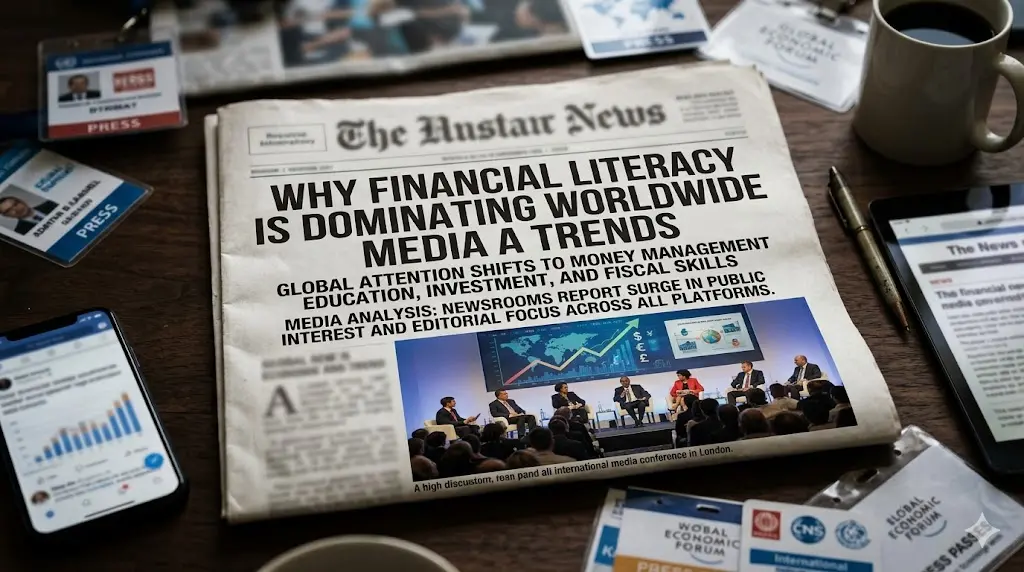
Financial literacy is dominating worldwide media trends because people are under more financial pressure than ever before. Rising living costs, online investing, digital payments, debt culture, and economic uncertainty have pushed money conversations into mainstream news, podcasts, social media, and even entertainment content.
Here’s the thing: people no longer see financial education as optional. They see it as survival. From teenagers learning budgeting skills to business owners trying to manage inflation, financial literacy has become one of the most searched and discussed topics globally.
Financial literacy is trending worldwide because people want more control over their money during uncertain economic times. Media platforms are responding with content about budgeting, investing, debt management, side income, and financial planning as audiences actively search for practical financial advice.
What Is Financial Literacy?
Financial Literacy: The ability to understand and manage money effectively, including budgeting, saving, investing, borrowing, and long-term financial planning.
Financial literacy isn’t just about knowing how banks work. It’s about making smart everyday decisions with money. That includes understanding credit cards, avoiding unnecessary debt, building savings, and preparing for future financial goals.
A few years ago, most people only encountered financial education through schools or banking institutions. Now? It’s everywhere. News channels discuss inflation daily. Social media creators explain taxes in short videos. Podcasts break down investment strategies in plain English.
That shift matters.
In my experience, people don’t necessarily want to become finance experts. They just want to stop feeling confused every time money comes up. That emotional angle is one reason financial education content keeps exploding online.
Expert Tip
If you’re creating content around personal finance education, focus on clarity over complexity. Most readers aren’t looking for technical jargon. They want practical explanations they can apply immediately.
Why Financial Literacy Matters in 2026
Financial literacy matters more in 2026 because the average person now handles financial decisions that once belonged to professionals. Investing apps, online banking, cryptocurrency markets, remote work income, and digital entrepreneurship have changed how people interact with money.
What most people overlook is how quickly financial responsibility has shifted onto individuals.
Twenty years ago, many workers depended heavily on traditional pensions, long-term employment, and stable economic systems. Today, millions of people freelance, switch careers often, or manage multiple income streams. That flexibility sounds exciting until tax season arrives or market conditions suddenly change.
Media companies understand this shift. That’s why financial literacy topics are receiving massive coverage across television, streaming platforms, blogs, and video channels.
Here are a few reasons this trend keeps growing:
Inflation Has Made Money Conversations Urgent
People notice rising grocery bills. They notice higher rent. They notice shrinking savings.
When economic pressure becomes personal, financial education stops being theoretical. It becomes practical and immediate. Audiences are actively searching for financial planning strategies that help them adapt.
Younger Generations Want Financial Independence Earlier
Gen Z and younger millennials are learning about investing, budgeting, and passive income much earlier than previous generations. Social media has accelerated this trend dramatically.
You’ll find teenagers discussing index funds online with surprising confidence. Some of that information is helpful. Some of it honestly isn’t great advice. But the interest itself is undeniable.
Digital Finance Is Everywhere
Digital wallets, online investing platforms, and cashless payments have become normal. Convenience is great, but it also increases the need for financial education.
People are realizing that easy access to money tools doesn’t automatically mean they understand how to use them wisely.
Financial Mistakes Spread Faster Now
One viral “get rich quick” trend can influence millions overnight.
That’s probably why credible financial literacy content is gaining traction. Audiences are becoming more skeptical of flashy promises and searching for grounded, realistic guidance instead.
Expert Tip
The most successful financial literacy campaigns usually avoid sounding overly corporate. Readers trust relatable stories and real experiences more than polished financial jargon.
How to Improve Financial Literacy Step by Step
Improving financial literacy doesn’t require a finance degree. Most people build strong money habits gradually through small consistent actions.
Here’s a realistic process that actually works.
1. Understand Where Your Money Goes
Start with awareness.
Track your expenses for at least one month. You might discover spending habits you never noticed before. Streaming subscriptions, food delivery, impulse purchases — small amounts add up fast.
I’ve seen people save significant money simply by reviewing bank statements honestly for the first time.
2. Learn Basic Budgeting Skills
Budgeting gets unfairly labeled as restrictive. Good budgeting actually creates freedom because you know exactly what you can spend without stress.
A simple budget includes:
Essential expenses
Savings goals
Debt payments
Flexible spending
You don’t need perfection here. You just need consistency.
3. Build an Emergency Fund
This sounds repetitive because financial experts mention it constantly, but there’s a reason.
Unexpected expenses happen. Medical bills, job loss, broken electronics, family emergencies — life gets messy.
Even a small emergency fund reduces panic and financial instability.
4. Learn the Basics of Investing
You don’t need to become a stock market expert overnight.
Start by understanding concepts like compound growth, risk tolerance, diversification, and long-term investing. Many people avoid investing simply because it feels intimidating.
Honestly, most beginner investing content overcomplicates things.
5. Question Financial Advice Online
This step matters more now than ever.
Not every financial influencer gives reliable advice. Some creators prioritize attention over accuracy. Before following any major financial strategy, verify information through trusted educational sources and multiple perspectives.
6. Keep Learning Continuously
Financial literacy isn’t a one-time achievement.
Economic conditions change. Technology changes. Tax rules change. Staying informed helps people adapt rather than react emotionally to financial situations.
Why Media Companies Are Obsessed With Financial Content
Financial content performs extremely well because money affects nearly everyone.
That alone makes it powerful from a media perspective.
But there’s another layer here. Financial topics create emotional engagement. Fear, ambition, stress, hope, independence — money triggers strong reactions. Audiences click on financial stories because those stories connect directly to daily life.
A realistic example: imagine a young professional earning a decent salary but struggling with debt and rising living expenses. They search for budgeting advice late at night after checking their bank account. That search leads to podcasts, videos, articles, and financial communities.
Now multiply that behavior by millions of people globally.
Media companies recognize this demand and continue expanding financial education coverage because audience interest keeps growing.
A Counterintuitive Reality
Here’s something surprising: financial literacy content often performs better during economic uncertainty than during stable periods.
You might assume people avoid money conversations during stressful times. Actually, the opposite usually happens. Financial anxiety increases curiosity. People actively search for answers when uncertainty rises.
That’s one reason financial planning topics dominate headlines during inflation spikes or recession fears.
Expert Tip
If you publish finance-related content, focus on solving one specific problem clearly instead of trying to sound overly sophisticated. Simplicity often outperforms complexity.
The Role of Social Media in Financial Literacy Trends
Social media changed financial education completely.
Years ago, learning about investing or budgeting often meant reading lengthy books or attending formal seminars. Today, people consume financial advice in short videos while waiting in line for coffee.
That accessibility has benefits and risks.
On the positive side, financial knowledge reaches audiences who previously ignored traditional finance content. People who never read business newspapers now watch creators explaining credit scores in plain language.
On the downside, misinformation spreads quickly too.
I’ve personally noticed that many viral finance trends focus heavily on speed and shortcuts. Fast wealth. Fast profits. Fast success. Real financial stability usually works slower than that, and honestly, slower isn’t very exciting for algorithms.
Still, social media has undeniably increased public engagement with financial literacy topics worldwide.
How Financial Literacy Impacts Businesses and Economies
Financial literacy doesn’t only help individuals. It affects entire economies.
Financially informed consumers tend to make more stable decisions. They borrow more carefully, save more consistently, and participate more confidently in economic systems.
Businesses benefit too.
Consumers who understand financial concepts are often more comfortable making long-term purchasing decisions, investments, or business partnerships. Financial awareness builds economic confidence over time.
Small businesses especially benefit from stronger financial education trends because entrepreneurs increasingly search for guidance on:
Cash flow management
Business budgeting
Tax planning
Digital payments
Investment opportunities
That growing demand explains why financial planning content now appears regularly across mainstream business media.
Real-World Example
A small online retail startup struggling with inconsistent cash flow began producing educational budgeting content for its audience. Within a year, customer engagement improved because the brand positioned itself as helpful rather than purely promotional.
That approach works because audiences trust businesses that educate instead of constantly selling.
Why Schools Are Still Falling Behind
This part frustrates many people.
Despite global interest in financial literacy, traditional education systems still often treat money management as secondary knowledge. Students graduate understanding historical events or scientific theories but may never learn how credit scores work.
That gap creates problems later.
Young adults frequently encounter loans, taxes, and debt without practical preparation. Media platforms are partially filling that educational gap, which explains why financial literacy content attracts huge audiences.
Let me be direct: schools probably should’ve prioritized practical financial education years ago.
Now online creators, podcasts, and independent educators are stepping into that role because demand became impossible to ignore.
Expert Tip
Financial education becomes far more effective when paired with real-life scenarios. Abstract advice rarely sticks. Concrete examples usually do.
What Actually Works in Financial Literacy Education?
Not every financial literacy strategy works equally well.
The most effective approaches tend to share a few characteristics:
Simplicity Beats Complexity
People engage more with clear explanations than technical financial terminology.
Storytelling Increases Retention
Audiences remember relatable money mistakes and personal experiences better than dry statistics.
Consistency Matters More Than Intensity
Learning a little about money regularly often produces better long-term outcomes than occasional deep dives.
Emotional Psychology Plays a Huge Role
Money decisions aren’t purely logical. Fear, status, anxiety, family habits, and social pressure influence spending behavior constantly.
Honestly, that emotional side of finance doesn’t get discussed enough.
People Most Asked About Financial Literacy
Why is financial literacy becoming so popular?
Financial literacy is becoming more popular because economic uncertainty, inflation, online investing, and digital banking have increased public interest in money management. People want practical skills that improve financial stability.
Does social media help financial education?
Social media helps financial education by making information accessible and engaging. However, misinformation can spread quickly, so users should verify financial advice carefully before acting on it.
Why do younger generations care more about financial literacy?
Younger generations often face rising living costs, student debt, unstable job markets, and digital financial systems. These pressures encourage earlier interest in budgeting, investing, and financial planning.
Can financial literacy improve mental health?
In many cases, yes. Better financial understanding can reduce stress related to debt, budgeting, and long-term planning. Financial confidence often improves overall emotional stability.
Is financial literacy only about investing?
Not at all. Financial literacy includes budgeting, saving, debt management, taxes, insurance, retirement planning, and everyday money decisions.
Why are businesses investing in financial education content?
Businesses use financial education content to build trust, increase audience engagement, and position themselves as credible industry resources. Helpful educational content often improves long-term customer relationships.
What’s the biggest misconception about financial literacy?
Many people think financial literacy is only for wealthy individuals or finance professionals. In reality, basic money management skills benefit nearly everyone regardless of income level.
Final Thoughts
Financial literacy is dominating worldwide media trends because money concerns affect nearly every part of modern life. Rising costs, digital finance, economic uncertainty, and changing work environments have made financial education more relevant than ever.
What most people are really searching for isn’t complicated financial theory. They want clarity. They want confidence. They want practical advice that helps them make smarter decisions without feeling overwhelmed.
And honestly, that demand probably isn’t slowing down anytime soon.
Businesses, educators, creators, and media platforms that provide trustworthy financial planning and personal finance education content will continue attracting attention because audiences genuinely need that information right now.
If your brand wants stronger online visibility through media coverage, high authority backlinks, and instant publishing opportunities, platforms like PR Wires and Rank Locally help businesses, startups, and agencies improve SEO ranking, organic traffic, and digital brand visibility through professional press release distribution services and digital marketing services tailored for modern growth strategies.