

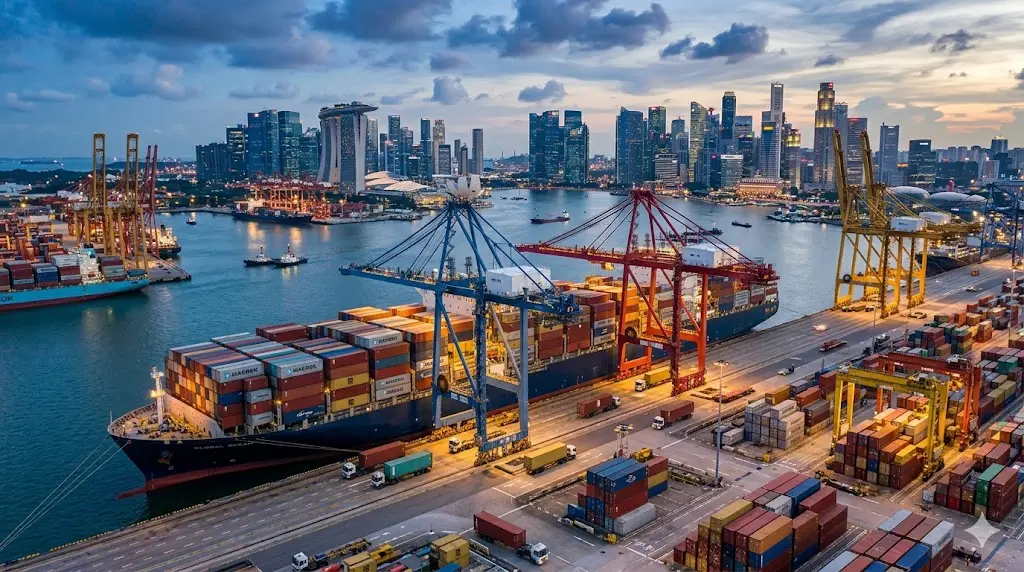
Cross-border trade is no longer just about importing products from one country to another. It’s changing how businesses invest, where capital flows, and why companies are expanding internationally faster than ever before. As supply chains become more connected and digital commerce keeps growing, international investment trends are shifting in ways many investors didn’t expect.
Cross-border trade is reshaping international investment trends because businesses now invest where supply chains, digital access, manufacturing efficiency, and consumer demand intersect. Companies are moving capital across borders to reduce risk, reach new markets, and stay competitive in a rapidly changing global economy.
What Is Cross-Border Trade?
Cross-border trade: the exchange of goods, services, technology, or capital between businesses and consumers located in different countries.
That sounds simple enough. But here’s the thing most people overlook: modern cross-border trade isn’t only driven by giant corporations anymore. Small businesses, independent sellers, tech startups, and digital service providers are all participating now.
A fashion brand in India can sell directly to customers in Europe. A software company in Singapore can hire developers in Eastern Europe. A manufacturing business in Mexico might attract investment from firms in Canada and Japan at the same time.
That interconnected structure is changing international investment trends at a speed many traditional investors underestimated.
In my experience, the biggest shift isn’t trade volume itself. It’s how trade influences where investors feel safe putting long-term capital.
Why Cross-Border Trade Matters in 2026
By 2026, businesses are thinking less about “local dominance” and more about “global flexibility.” That’s a massive difference.
A decade ago, companies often built operations in one major market and expanded slowly. Now they spread operations across multiple countries almost from day one. Part of that comes from political uncertainty. Another part comes from technology making global operations cheaper and faster.
Cross-border trade matters because it directly affects:
Foreign direct investment
Currency movement
Manufacturing expansion
Logistics infrastructure
Digital payment systems
Global real estate demand
Startup funding strategies
What’s interesting is that investors are no longer chasing only the biggest economies. They’re targeting trade-friendly regions with lower operational costs and stable export potential.
Vietnam is one example people talk about a lot. Businesses shifted manufacturing there after supply chain disruptions exposed weaknesses in relying too heavily on one country. That brought new factories, infrastructure spending, and foreign capital into the region.
You’ll notice similar patterns in parts of Southeast Asia, Eastern Europe, and the Middle East.
What most guides miss is this: cross-border trade doesn’t just create opportunity. It redistributes investment power.
Countries that improve logistics, simplify customs systems, and support digital commerce are suddenly competing with economies much larger than themselves.
Expert Tip
Investors often focus on stock markets while ignoring trade infrastructure. Yet ports, shipping corridors, industrial zones, and digital payment networks are frequently early indicators of long-term investment growth.
How Cross-Border Trade Influences International Investment Trends
1. Businesses Follow Supply Chain Stability
Companies learned a hard lesson after global disruptions hit manufacturing and shipping networks.
Relying on one country for production creates risk.
As a result, businesses started diversifying suppliers and building “multi-country supply chains.” Once companies move production into new regions, investment usually follows. Warehouses get built. Transportation systems expand. Local hiring increases.
Capital naturally moves toward operational resilience.
2. Digital Commerce Accelerates Foreign Expansion
E-commerce changed everything.
A business no longer needs physical stores in ten countries to generate international sales. Digital storefronts, cross-border payment systems, and global advertising platforms made expansion much easier.
That means investors now look at international scalability differently. Companies with strong digital export potential often attract funding faster than businesses limited to domestic markets.
Here’s the counterintuitive part: smaller businesses sometimes benefit more from globalization than large corporations because they can adapt quicker.
3. Trade Agreements Shape Capital Flow
Trade agreements reduce friction between countries. Lower tariffs and simplified regulations encourage businesses to invest internationally.
When countries sign favorable trade deals, investors pay attention almost immediately.
Manufacturing hubs, logistics centers, and export businesses usually see increased activity first. Real estate and infrastructure investments often come next.
4. Currency Diversification Is Becoming Normal
Many investors now spread exposure across multiple currencies instead of relying heavily on one economy.
Cross-border trade creates natural demand for currency diversification because businesses operate internationally. That affects everything from private equity decisions to startup fundraising strategies.
I’ve seen businesses that once operated entirely in local currency suddenly manage payments in three or four currencies within just a couple years.
That wasn’t common before.
How to Adapt to Changing International Investment Trends
Step 1: Identify Trade-Driven Growth Markets
Look beyond headline economies.
Countries improving export infrastructure, digital payment adoption, and manufacturing efficiency often attract long-term investment growth earlier than expected.
Emerging trade hubs can sometimes outperform mature markets during transition periods.
Step 2: Monitor Supply Chain Shifts
Pay attention to where companies relocate production.
If manufacturers move into a specific region consistently, investment opportunities often appear nearby in logistics, commercial property, and technology services.
Supply chain movement usually leaves clues before mainstream investors react.
Step 3: Focus on Digital Trade Expansion
Cross-border e-commerce is still growing rapidly.
Businesses supporting international payments, fulfillment systems, AI-powered logistics, or localized digital marketing may benefit from continued global trade expansion.
That includes smaller firms too, not only multinational corporations.
Step 4: Study Government Trade Policies
Governments competing for foreign investment often introduce incentives like tax reductions, infrastructure funding, or simplified regulations.
Smart investors watch policy changes carefully because trade-friendly reforms can shift investment momentum very quickly.
Step 5: Diversify Across Regions
This might sound obvious, but many investors still overconcentrate geographically.
Cross-border trade increases global interconnectedness, yet it also increases regional volatility. Diversification matters more now because economic shocks spread faster between countries.
Expert Tip
Don’t confuse temporary market excitement with sustainable trade growth. Real investment strength usually comes from infrastructure, manufacturing efficiency, and long-term consumer demand — not hype cycles.
The Unexpected Side Effect of Cross-Border Trade
Here’s my hot take.
Cross-border trade may actually strengthen regional economies more than global giants over the next decade.
That sounds backward because globalization supposedly favors massive corporations. But smaller regional players can adapt faster, customize operations locally, and respond quicker to shifting regulations.
A mid-sized logistics company operating efficiently between three neighboring countries might outperform a giant multinational burdened by bureaucracy.
I’ve watched smaller exporters scale surprisingly fast simply because they understood niche regional demand better than bigger competitors.
That flexibility matters now.
A Realistic Example of Trade Reshaping Investment
Imagine a renewable energy manufacturer based in Germany expanding production into Southeast Asia.
At first, it looks like a basic operational move. Lower manufacturing costs. Better shipping access. Growing regional demand.
But then the ripple effect starts.
Local construction firms gain contracts. Warehousing demand rises. Transportation businesses expand. Foreign investors notice increasing industrial activity. Commercial property values climb nearby.
Within a few years, one trade-related decision transforms an entire investment ecosystem.
That’s how modern international investment trends often develop — gradually at first, then very quickly.
What Risks Should Investors Watch?
Cross-border trade creates opportunity, but it also introduces instability.
Political disputes, tariff changes, shipping disruptions, and currency volatility can affect investment performance almost overnight.
Some investors underestimate regulatory risk badly.
A country might attract foreign capital rapidly but struggle with inconsistent trade policy later. That uncertainty can slow investment growth despite strong economic potential.
There’s also the issue of overdependence on export markets. Economies tied too closely to external demand sometimes become vulnerable during global slowdowns.
Balance matters.
Expert Tips: What Actually Works
From what I’ve seen, successful international investors usually focus on patterns instead of headlines.
News cycles often exaggerate short-term trade disputes while ignoring long-term structural growth.
The better approach is watching where businesses keep building despite uncertainty.
If companies continue expanding warehouses, ports, manufacturing centers, and digital infrastructure in a region, there’s usually a reason.
Another thing people miss: talent mobility matters almost as much as goods movement now.
Countries attracting skilled workers often attract investment next because innovation follows talent surprisingly fast.
And honestly, patience still beats aggressive speculation most of the time.
People Most Asked About Why Cross-Border Trade Is Reshaping International Investment Trends
Why does cross-border trade affect foreign investment?
Cross-border trade creates economic connections between countries, making international expansion more attractive for businesses. When trade increases, investors often follow because they see opportunities in infrastructure, logistics, manufacturing, and technology.
Which industries benefit most from cross-border trade?
Manufacturing, logistics, fintech, e-commerce, renewable energy, and supply chain technology often benefit heavily. Digital services are growing particularly fast because businesses can now operate internationally without large physical footprints.
Is cross-border trade risky for investors?
Yes, it can be. Currency fluctuations, trade restrictions, and geopolitical tensions may affect returns. Still, diversified international exposure often reduces dependence on a single economy.
How does digital commerce influence international investment trends?
Digital commerce lowers expansion barriers for businesses. Companies can reach international customers faster, which attracts investors looking for scalable growth opportunities tied to global demand.
Are emerging markets becoming more attractive because of trade?
In many cases, yes. Emerging markets improving infrastructure and export capabilities are attracting more foreign capital as businesses seek alternatives to concentrated supply chains.
What role does technology play in global trade?
Technology improves shipping coordination, digital payments, supply chain visibility, and international communication. Those improvements reduce operational friction and encourage businesses to expand globally.
Can small businesses benefit from cross-border trade?
Absolutely. Smaller businesses now access international audiences through e-commerce platforms and digital marketing tools. That creates growth opportunities that were once available mostly to large corporations.
Final Thoughts
Why cross-border trade is reshaping international investment trends comes down to one simple reality: capital follows opportunity, and opportunity is becoming increasingly global.
Businesses want flexibility. Investors want resilience. Consumers want faster access to products and services from anywhere in the world.
Cross-border trade connects all three.
The countries and companies adapting fastest to this shift will probably attract the strongest long-term investment growth over the next decade. And honestly, we’re still early in that transition.
If you need stronger online visibility, high authority backlinks, and wider media coverage, our network platforms like online press release distribution and local SEO services help businesses, startups, and agencies improve SEO ranking, brand visibility, and organic traffic through instant publishing solutions and targeted digital promotion strategies.